Are Mizuno back to their best with their new Modern Series range?
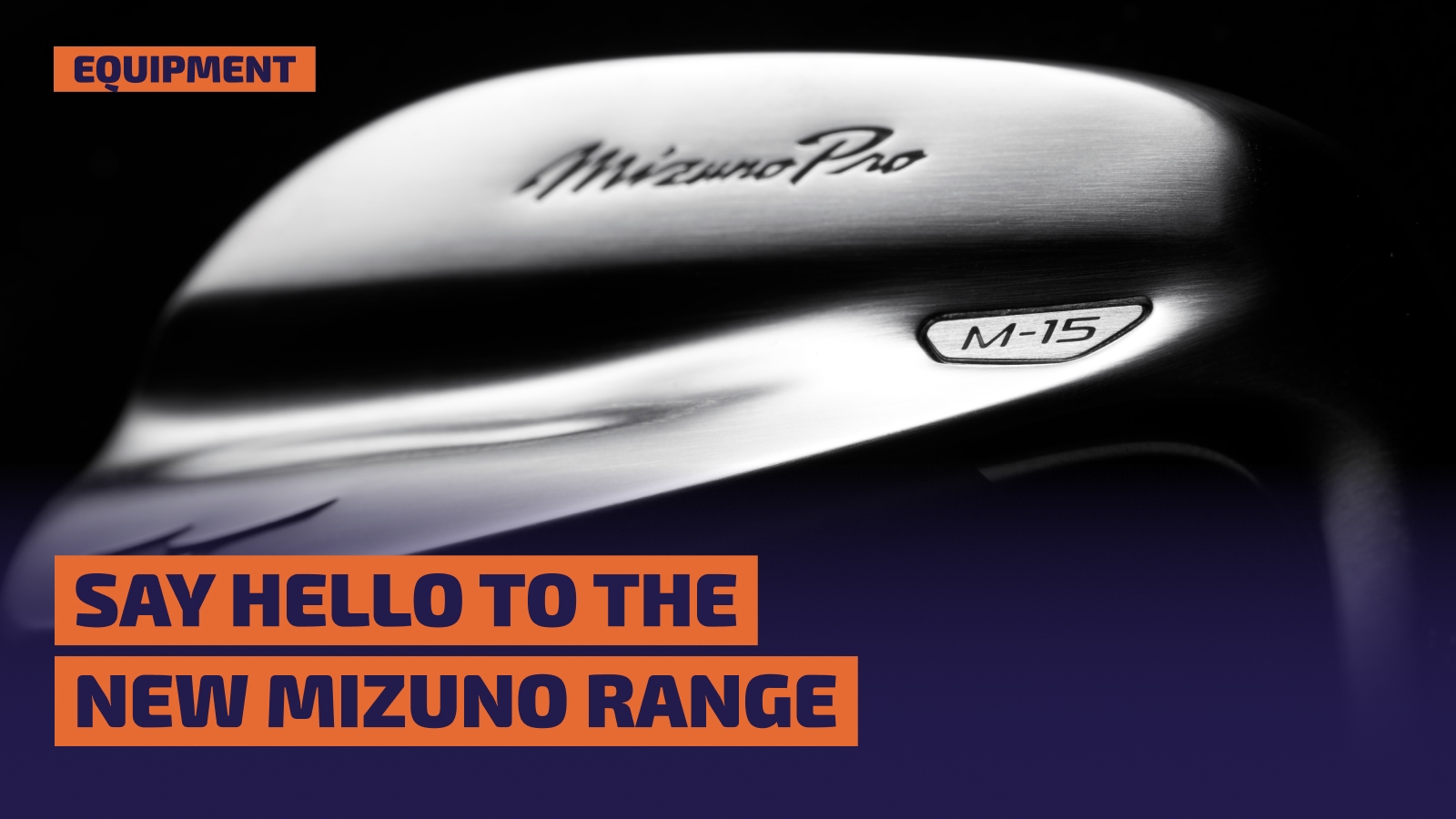
One of the game’s greatest pleasures is to put a Mizuno iron behind the ball and then put your best swing on it.
The Japanese brand have always been known for their craftsmanship and now they’ve released the all-new Modern Series with the M-13 and M-15 irons leading the way.
There is already the Signature Series (S-1 muscleback and S-3 cavity), which is Mizuno’s most traditional tour iron lineage, and the Modern Series complements this with ‘solutions in speed, stability and shot-height control, all within the classic, compact profiles trusted by elite players.’
In short better players will likely move into these irons, given the incredible look, feel and performance of both. At first glance you might think that the M-15 is the tour-preferred option, with the sharper, sleeker profile, but the M-13 is the successor to the Mizuno Pro 243.
Mizuno M-13 tech talk
Here there are three different compositions..
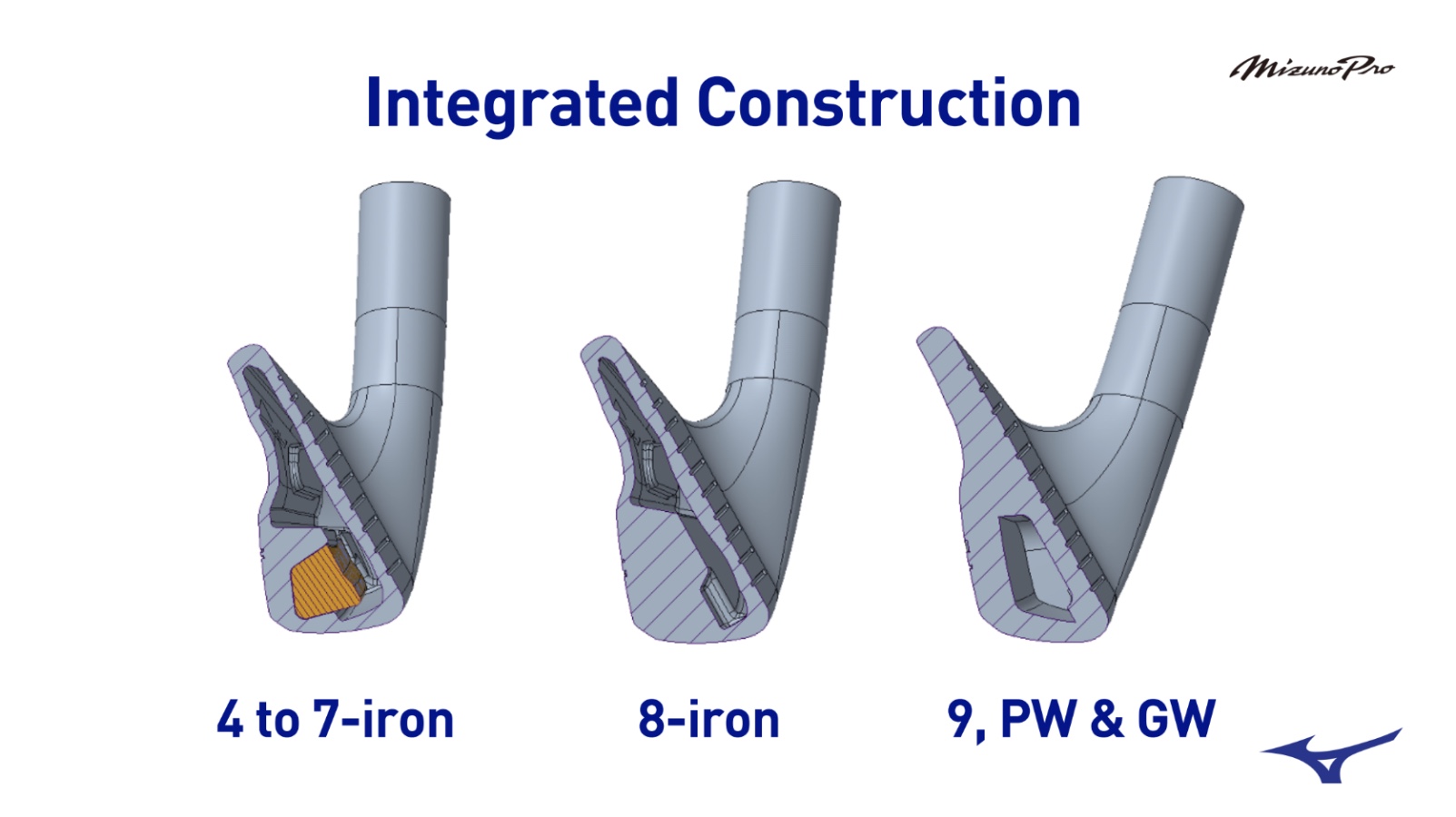
In the 4 and 5-irons, a Pocket Cavity Grain Flow Forged construction merges Chromoly 4120 with 431 stainless steel, enabling Mizuno’s thinnest ever Contour Ellipse Face, just 1.37mm thick, around 35% thinner than the Mizuno Pro 243. This produces higher ball speeds and distance while keeping the responsive feedback expected from a forged iron.
The 6, 7 and 8-irons, a Micro-Slot Grain Flow Forged construction with a face 0.3mm thinner than its predecessor increases flex and delivers controlled speed gains with a mid-to-high COR performance.
From 9-iron through to gap wedge, a single-piece 1025 Elite forging prioritises precision, control, and the renowned soft impact feel.
Feel and sound wise Mizuno’s Harmonic Impact Technology, combined with a copper underlay and full cavity ABS badge, fine-tunes vibration patterns and delivers a clean, tour-ready appearance.
The Triple Cut Sole introduces sharper leading edges and bevelled trailing relief, ensuring dependable turf interaction from every lie. Completing the design, a Nickel Chrome Satin Brush finish reduces glare and reinforces the premium aesthetic.
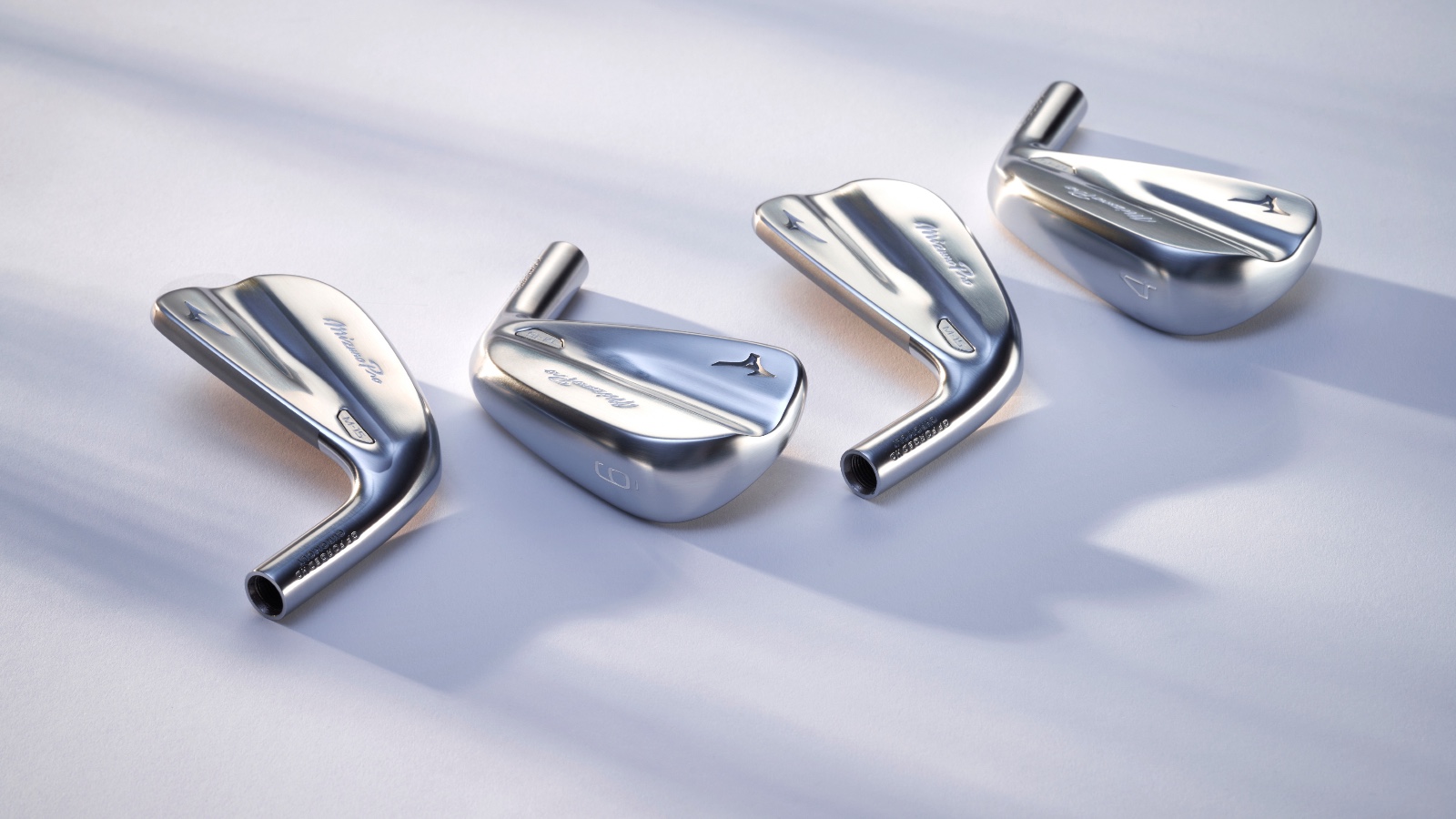
Mizuno M-15 tech talk
The M-15 is the successor to the Mizuno Pro 245 and, again, there are different make-ups as we move through the set.
In the 4 to 8-irons the multi-thickness forged construction, supported by a hollow body design, optimises ball speed and consistency while preserving the soft, responsive Mizuno feel.
To improve launch and stability, tungsten weighting of 51g in the long irons and 50.3g in the mids has been strategically suspended within the head, helping produce straighter, more forgiving performance. The long and mid irons pair a Grain Flow Forged 4135+ Chromoly face and neck with a stainless-steel back piece for additional rebound.
The 9-iron to gap wedge transitions into a partial hollow 1025E Grain Flow Forged HD body with a stainless back, a construction that emphasises control, precision and manoeuvrability.
Refined sole geometry with added bounce encourages a cleaner entry and smoother exit through the turf and the same Harmonic Impact Technology and copper underlay and Premium Nickel Chrome Satin finish complete the sound and look.
How we tested the M-13 and M-15 irons
We tested these irons on the indoor simulator at Moortown in Leeds, under the guidance of PGA Professional Eddie Hammond. We had the 5, 7 and 9-iron in each and predominantly hit the 7.
The findings
1) These are long. I play TaylorMade P790 irons which are fairly explosive and are at least one club less than any previous iron that I’ve used. Both the the M-13 and the M-15 carried further.
The TaylorMade has a loft of 30˚ while the M-15 is 29˚ but the M-13 is 32˚. My ball speed was up by 5mph with the M-15 and by 3mph with the M-13.
2) There is so little difference in terms of what you are looking down on with either Mizuno iron. Having used this brand from the age of 16-30 (Tour Pro Original) it was a lovely reminder that a Mizuno iron is the best looking out there.
The M-15 would be my personal preference, for looks and feel, but this is so marginal. Either iron is spectacularly good.
3) My Handicap Index is 5.3 so, in my head, I probably thought the M-15 would suit me more with a bit more forgiveness etc etc.
We’re all quick to want to pigeon hole clubs into categories like ‘players irons’ but the M-13 worked better for me. There was slightly less distance but it still out-performed my own iron.
“The M-15 is probably a comparison to your P790,” explains Hammond.
“It’s one degree stronger in loft so there’s maybe a little bit in there but the fact that the M-13 probably isn’t designed to be compared against your 790, but it’s coming off the face three miles an hour faster in ball speed, but it’s good for you because the launch is higher because it’s two degrees weaker than your P790, which is then getting your peak height up by three yards and then getting the descent angle up. But actually you’re gaining three yards.
“If you were to compare all three of those clubs and say, what’s the best club there for you, it’s not necessarily the longest. There’s a gain of three yards going to the M-13 because of that ball speed, but the fact you’ve now got more control hitting the ball into a green because it’s coming down steeper, that would be the winner.”
4) The 5-iron, a club I no longer have in the bag, was also very playable and certainly easier to launch than what I was expecting. If I was to play these I’d certainly include at least the 5-iron and play around with the lofts.
This surely doesn’t need repeating but find a good fitter if you are going to try these as there are all sorts of ways that you can nail down your yardage gaps.
5) Srixon dominated the irons rankings in 2025, a market where Mizuno have always excelled, and with the introduction of this Modern Series range we might well see things revert to how things were.